
30 May 2026 / andrew
For years, automation meant rules: if this happens, do that. It works for predictable, repetitive tasks but breaks down the moment a process needs judgment, context, or a decision that wasn't scripted in advance.
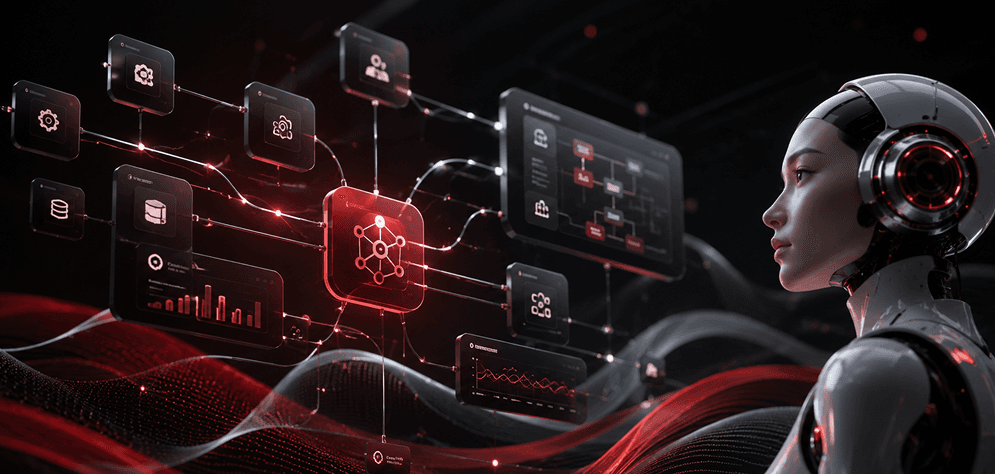
Agentic AI changes the model. Instead of following a fixed script, an AI agent can interpret a goal, break it into steps, choose the right tools, and adapt as conditions change.
For enterprises, this unlocks workflows that were previously too messy to automate: reconciling data across systems, handling exceptions, coordinating between departments, and responding to events in real time.
The shift from workflow automation to agentic AI is less about replacing tools and more about raising the ceiling on what automation can do.








.svg.png&w=3840&q=75)